The science behind the catalog.
Resources for understanding research materials, analytical methods, and the compounds we catalog. Reference material — not medical guidance.

Fenbendazole in Laboratory Research: Benzimidazoles, β-Tubulin, and Experimental Design
Fenbendazole is a benzimidazole carbamate small molecule (CAS 43210-67-9, C₁₅H₁₃N₃O₂S, MW ≈ 299.35 g/mol). In veterinary parasitology it is known as a...

Epithalon (Epitalon) Research Overview: The AEDG Tetrapeptide in Laboratory Models
Epithalon - also spelled Epitalon or Epithalone - is a synthetic tetrapeptide with the sequence Ala-Glu-Asp-Gly (AEDG). It was developed as a...
What Is RT (GLP-3) in Laboratory Research?
RT (developer code LY3437943) is an investigational synthetic peptide engineered as a unimolecular triple agonist of three Class B G-protein-coupled receptors central...
Tesamorelin vs Sermorelin: A Research Comparison of Two GHRH Analogues
Tesamorelin and sermorelin sit in the same pharmacological family: both are synthetic analogues of growth hormone–releasing hormone (GHRH), both bind the pituitary...
Ipamorelin Research Overview: A Selective Growth Hormone Secretagogue
Ipamorelin is a synthetic pentapeptide growth hormone secretagogue (GHS) that selectively activates the ghrelin receptor - formally the growth hormone secretagogue receptor...
Multi-Peptide Blends Explained: GLOW, KLOW, and BPC/TB in Laboratory Research
Research catalogues increasingly offer multi-peptide blends - single vials that combine two or more characterised peptides in fixed ratios. Names such as...
PT-141 (Bremelanotide) in Laboratory Research: Melanocortin Pathways, Models, and Format Notes
PT-141, known generically as bremelanotide, is a synthetic cyclic heptapeptide melanocortin receptor agonist. It is used in laboratory research on central melanocortin...
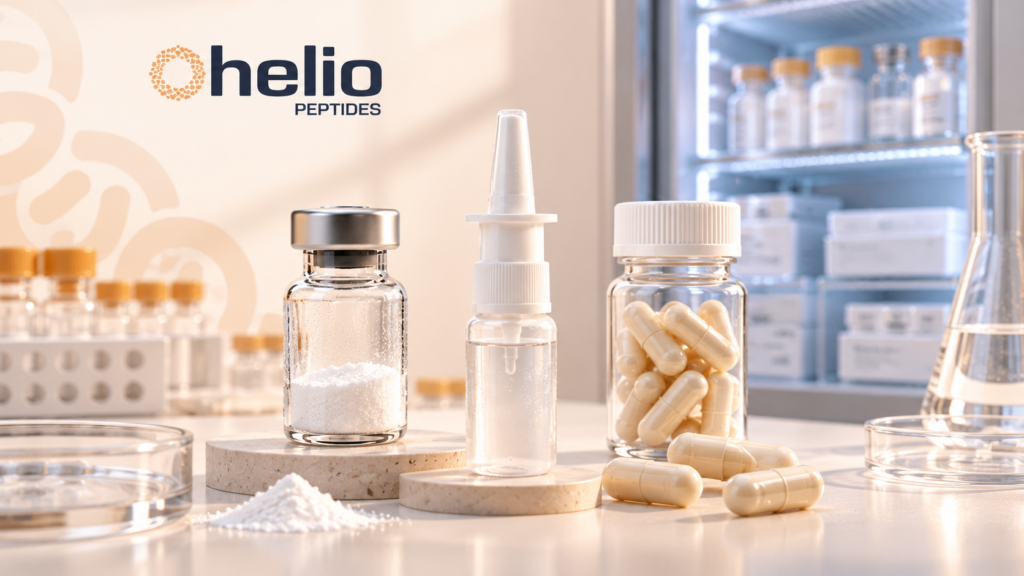
Research Peptide Storage and Stability: Lyophilized Vials, Liquid Sprays, and Capsules
Peptide stability is format-dependent. The same sequence that remains usable for years as a sealed lyophilized powder can lose measurable content within...

GHK-Cu in Laboratory Research: Mechanisms, Models, and Multi-Peptide Blends
GHK-Cu is the copper(II) complex of the tripeptide glycyl-L-histidyl-L-lysine. It appears frequently in dermal, wound, and extracellular-matrix research literature and has become...
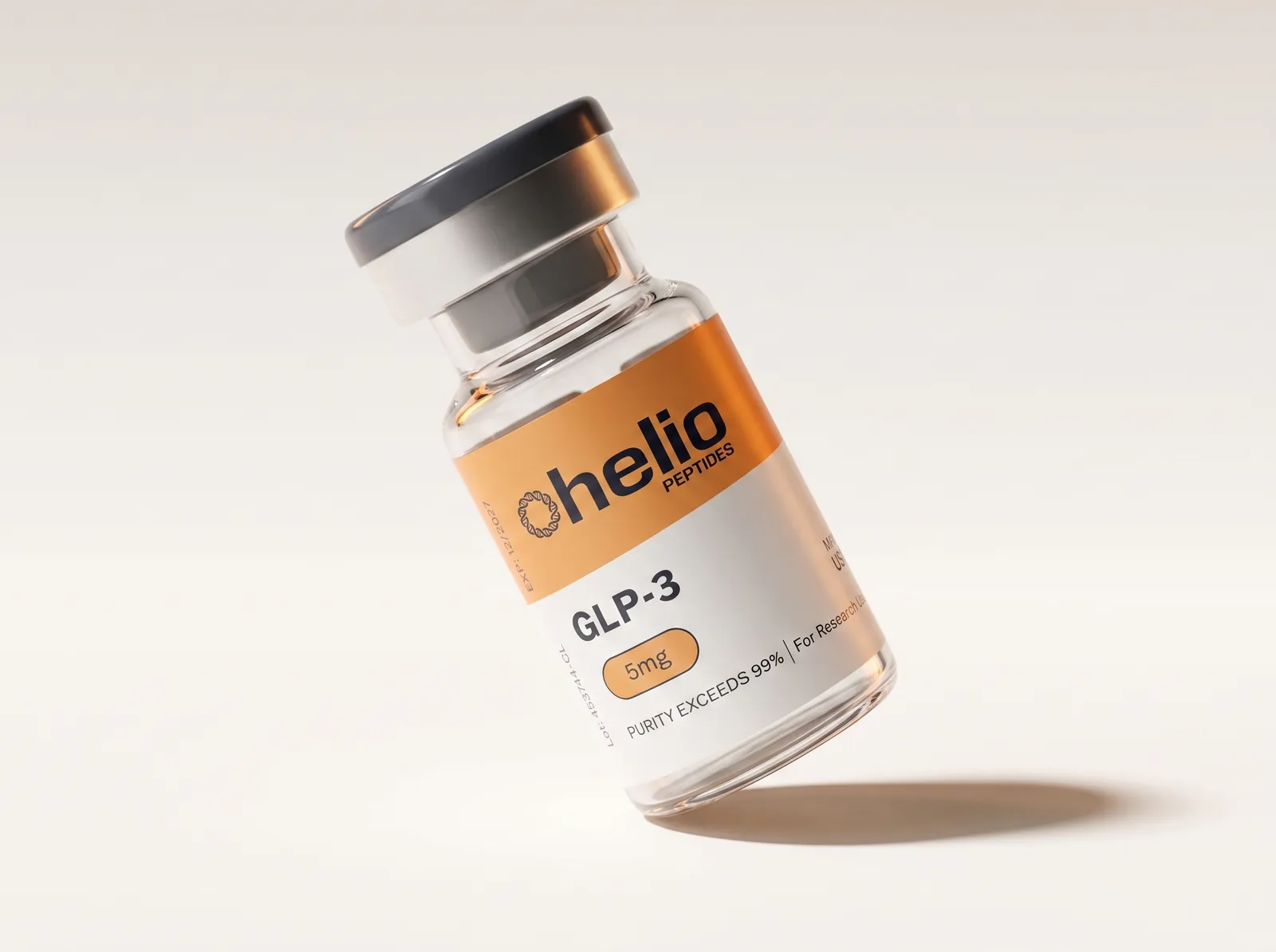
What Is Snap-8? A Research Overview
A plain-language research overview of Snap-8 (Acetyl Octapeptide-3) — what the cosmetic-research peptide is, why it's studied, and how purity is verified....
What Is IGF-1 LR3? A Research Overview
A plain-language research overview of IGF-1 LR3 — what the long-acting IGF-1 analogue is, why it's studied, and how purity is verified....
What Is Thymosin Alpha-1? A Research Overview
A plain-language research overview of Thymosin Alpha-1 (TA-1) — what the immunomodulatory peptide is, why it's studied, and how purity is verified....
What Is AOD-9604? A Research Overview
A plain-language research overview of AOD-9604 — what the modified hGH fragment is, why it's studied, and how purity is verified. Research...
What Is Melanotan II? A Research Overview
A plain-language research overview of Melanotan II (MT2) — what the melanocortin agonist is, why it's studied, and how purity is verified....
What Is GLP-3 (RT)? A Research Overview
A plain-language research overview of GLP-3 (Retatrutide, LY3437943) — what the triple incretin agonist is, why it's studied, and how purity is...
What Is Tesamorelin? A Research Overview
A research overview of Tesamorelin — the GHRH analog studied within the growth-hormone axis, and how purity is verified. For research use...
What Is GHK-Cu? A Research Overview
A research overview of GHK-Cu — the copper-binding peptide studied in skin, tissue, and cellular research, and how purity is verified. For...
What Is SLU-PP-332? A Research Overview
A research overview of SLU-PP-332 — the ERR agonist studied in mitochondrial and metabolic research, and how purity is verified. For research...
What Is MOTS-c? A Research Overview
A research overview of MOTS-c — the mitochondrial-derived peptide studied in metabolic and aging research, and how purity is verified. For research...
What Is PT-141 (Bremelanotide)? A Research Overview
A research overview of PT-141 (Bremelanotide) — what it is, its role in melanocortin research, and how purity is verified. For research...
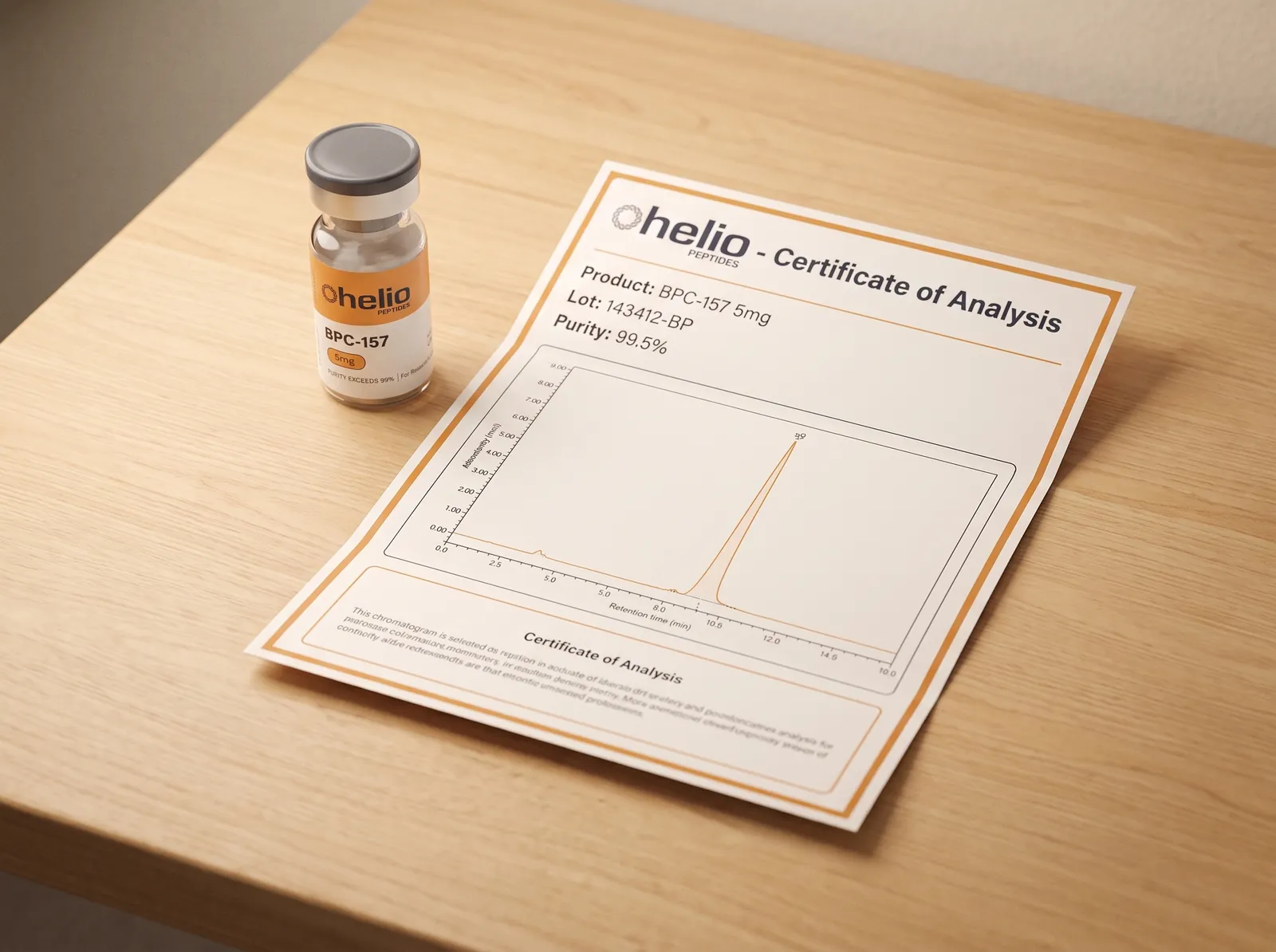
Research Peptide Blends Explained
Research peptide blends explained — what they are, why researchers use them (BPC/TB, Glow), and what to check before choosing one. For...
Why "Made in the USA" Matters for Research Peptides
Why genuinely US-made research peptides matter — supply-chain visibility, consistency, and accountability vs relabeled imports. For research use only.
What Does "99%+ Purity" Actually Mean?
What "99%+ purity" means for research peptides — what it measures, where impurities come from, and how to verify it. For research...
In-Vitro vs In-Vivo Research Explained
In-vitro vs in-vivo research explained in plain language — what each means, how they differ, and why it matters. For research use...
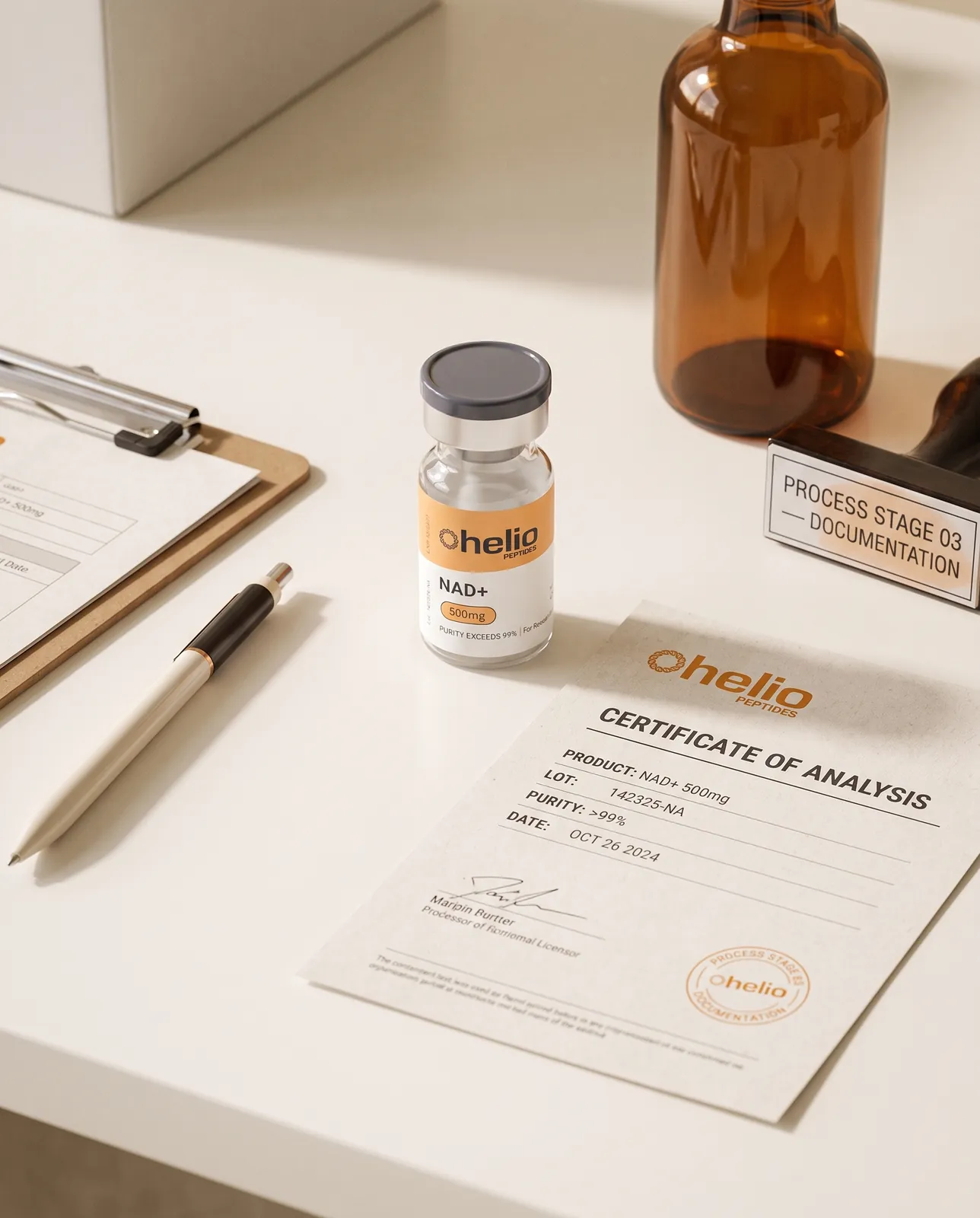
How to Store Research Peptides Properly
How to store research peptides — lyophilized vs reconstituted, temperature, and avoiding freeze-thaw, to keep compounds stable. For research use only.
What Is a Certificate of Analysis (COA)?
What a Certificate of Analysis (COA) is, what a good one contains, and why you should never buy research peptides without one....
What Is HPLC Testing? How Peptide Purity Is Verified
HPLC testing explained — how it measures peptide purity (the source of "99%+"), and why HPLC + mass spec is the standard....
What Is Lyophilization and Why It Matters
Lyophilization (freeze-drying) explained — why research peptides are lyophilized, what it means for stability, and reconstitution basics. For research use only.
How Are Research Peptides Made? Peptide Synthesis Explained
How research peptides are made — solid-phase peptide synthesis (SPPS), purification and lyophilization, and why it matters. For research use only.

5-Amino-1MQ and Metabolic Research: An Overview
An overview of the research areas explored with 5-Amino-1MQ — metabolic enzymes and adipose-cell research. For research use only.
Semax in Cognitive Research: An Overview
An overview of the research areas explored with Semax — cognitive processes and neuroprotection pathways. For research use only.
NAD+ and Cellular Research: An Overview
An overview of NAD+ in cellular and aging research — energy metabolism, DNA repair, and precursor research. For research use only.
What the Research Says About MK-677
An overview of the research areas explored with MK-677 (Ibutamoren) — growth-hormone axis and metabolic research. For research use only.
BPC-157 Research: What Studies Have Explored
An overview of the research areas explored with BPC-157 — connective tissue, GI, and cytoprotection — in laboratory settings. For research use...
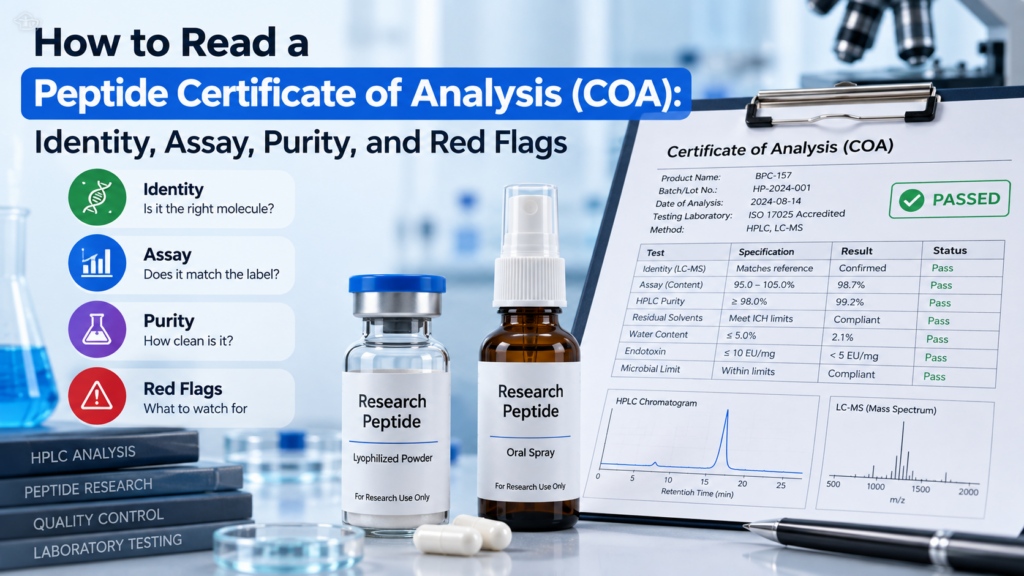
How to Read a Peptide Certificate of Analysis (COA): Identity, Assay, Purity, and Red Flags
A Certificate of Analysis is the single most important document a research peptide supplier can provide. It is also one of the...
NAD+ vs NMN: What Research Says
NAD+ and NMN are two of the most talked-about compounds in longevity and cellular research, and they're closely related — which is...
MK-677 vs Ipamorelin: A Research Comparison
MK-677 and Ipamorelin both come up in growth-hormone research, and researchers often compare them. This article explains what each one is, how...
Capsules vs Liquid Sprays vs Vials: Research Peptide Formats Explained
Research peptides are supplied in several formats — most commonly lyophilized vials, pre-mixed liquid sprays, and capsules. This article explains the practical...
Semax vs Selank: A Research Comparison
Semax and Selank are two synthetic research neuropeptides that come up constantly in cognitive and nervous-system research — and they're often confused...
BPC-157 vs TB-500: What's the Difference?
BPC-157 and TB-500 are two of the most studied research peptides in tissue and recovery research — and they're frequently mentioned together....
What Is Selank (TP-7)? A Research Overview
Selank — sometimes referred to as TP-7 — is a research peptide that appears often in neurological and behavioral research literature. This...
What Is Semax? A Research Overview
Semax is a research peptide that appears frequently in cognitive and neurological research literature. This overview explains what Semax is, why it's...
What Is NAD+? A Research Overview
NAD+ is one of the most talked-about compounds in longevity and cellular research. This overview explains what NAD+ is, why it draws...
What Is MK-677 (Ibutamoren)? A Research Overview
MK-677 — also known as Ibutamoren — is a widely studied research compound that comes up often in growth-hormone and metabolic research...
What Is BPC-157? A Research Overview
BPC-157 is one of the most widely studied research peptides in laboratory settings. If you're new to the topic, this overview explains...